Templates/Mad/Sad/Glad
Product, Design, Remote Teams, Ice Breakers

Mad/Sad/Glad Retrospective Template

An emotion-based retro format that gives team members a safe space to express frustrations, concerns, and wins — building psychological safety and honest communication.

20–30 min3 columnsRemote friendly
Create a board
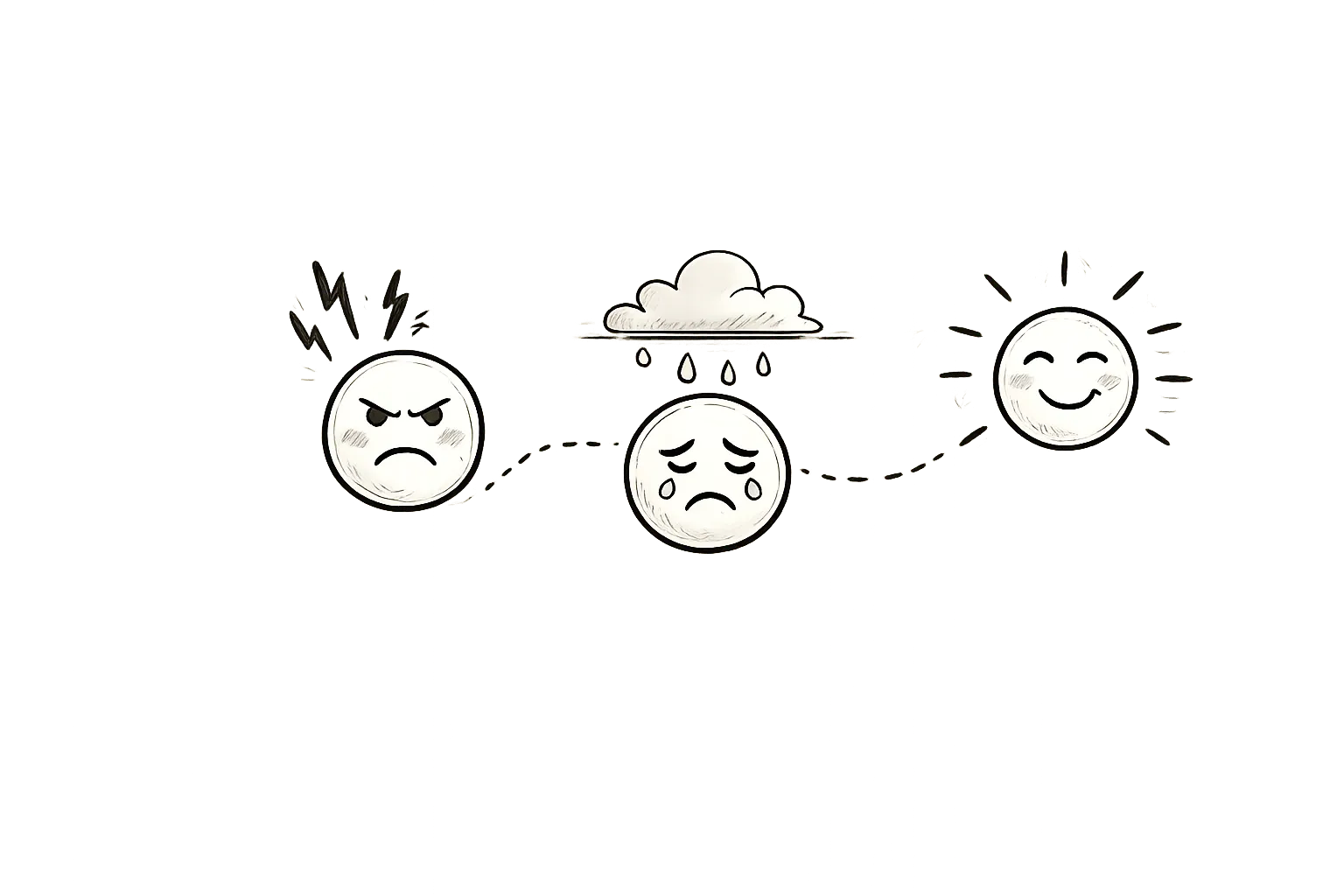
Mad/Sad/Glad template illustration
Interactive preview

See it in action

Drag example cards between columns or try voting to explore the format.

10 example cards · changes stay in this previewDrag cards between columns

Mad3

What frustrated or angered you this sprint? Name specific situations, not people.

Scope changes on day 14 of a 2-week sprint

Discovering production bug that was known for weeks

No time allocated for refactoring — again

Sad3

What disappointed you? What could have gone better?

We didn't get to the accessibility improvements

Lost a team member to another project

Couldn't deliver on our sprint promise

Glad4

What made you happy or proud this sprint? Wins, big and small.

Shipped the new API — it's getting great feedback

CI pipeline time dropped from 45 min to 12 min

Team bonding offsite was genuinely fun

New hire is ramping up faster than expected

The prompts behind the format

What goes in each column?

Use these prompts and example cards to start a focused conversation.

Mad

What frustrated or angered you this sprint? Name specific situations, not people.

Example cards

  • Mad that we keep discovering requirements mid-sprint
  • Mad about the last-minute scope changes
  • Mad that technical debt keeps getting deprioritized

Keep in mind: Don't attack individuals — keep it situational

Sad

What disappointed you? What could have gone better?

Example cards

  • Sad we didn't hit our sprint commitment
  • Sad that a team member is leaving
  • Sad we deprioritized the accessibility work again

Keep in mind: Don't minimize sadness — it's as valid as anger

Glad

What made you happy or proud this sprint? Wins, big and small.

Example cards

  • Glad we finally shipped the dashboard feature
  • Glad the new CI pipeline cut build times in half
  • Glad we onboarded two new team members smoothly

Keep in mind: Don't skip this column — celebration is essential

Timeline

How to run it

Mad/Sad/Glad takes about 20–30 min. Here's the flow.

3
01

Set the tone

Facilitator reminds the team this is a judgment-free space. All feelings are valid and welcome.

10
02

Add cards

Team silently adds cards to Mad, Sad, and Glad. Encourage at least one card per column.

7
03

Group and vote

Cluster similar emotions, vote on what to discuss. Prioritize themes, not individual grievances.

7
04

Discuss

Discuss the top-voted items in each column. Focus on understanding, not defending.

3
05

Action items

Identify 1-2 concrete changes that address the most important emotional themes.

Best practices
  • ✓Start with Glad — it sets a positive tone before venturing into Mad and Sad.
  • ✓Use anonymous mode for the Mad column — people share more honestly.
  • ✓Don't try to solve everything — sometimes listening is the intervention.
  • ✓Facilitator should model vulnerability by sharing their own cards first.
  • ✓Follow up on emotional themes in 1-on-1s between sprints.
  • ✓Celebrate Glad items publicly — they reinforce positive culture.
Common mistakes
  • ✗Letting Mad dominate the conversation — make space for all three emotions equally.
  • ✗Dismissing Sad items as 'not actionable' — sometimes validation is the action.
  • ✗Forcing solutions during the discussion phase — listen first, solve second.
  • ✗Skipping Glad when time runs short — it's the most important column for morale.
  • ✗Running this format weekly — emotional retros are most valuable every 2-3 sprints.
  • ✗Not following up on themes — if Mad patterns repeat, the format loses trust.
About this template

What is a Mad/Sad/Glad retrospective?

The Mad/Sad/Glad retrospective is one of the most emotionally intelligent Agile retrospective formats in existence. Instead of asking "what went wrong," it asks "how do you feel?" — unlocking a level of honesty and psychological safety that process-focused formats often miss.

This format emerged from the recognition that team dynamics and emotional health directly impact sprint outcomes. A team that feels unheard or frustrated will ship slower, regardless of how efficient their processes look on paper. Mad/Sad/Glad gives every team member permission to name their emotions without judgment.

The psychology behind Mad/Sad/Glad is rooted in emotional granularity theory — the ability to identify and name specific emotions. When engineers say "I'm frustrated," it's often vague. The Mad column forces specificity: what exactly is making me angry? The Glad column captures genuine wins. The Sad column creates space for disappointment without shame. Together, these three buckets provide a complete emotional picture of a sprint.

FAQ

Frequently asked questions

What is a Mad/Sad/Glad retrospective?

Mad/Sad/Glad is an emotion-based retrospective format where team members share what made them mad, sad, and glad during a sprint. It builds psychological safety and surfaces hidden team dynamics.

How is Mad/Sad/Glad different from other retros?

Unlike process-focused formats like Start/Stop/Continue, Mad/Sad/Glad centers on emotions. It's better for surfacing morale issues, burnout, and team dynamics that structured formats miss.

Should I run Mad/Sad/Glad every sprint?

Every 2-3 sprints is usually better than weekly. Emotional retros are most impactful when the team has had time to accumulate genuine feelings to share.

Can I use Mad/Sad/Glad for remote teams?

Yes — LetRetro's async mode lets remote team members contribute to each column in their own time, making it easier to share honest emotions.

What if a Mad item is about a person?

The facilitator should gently redirect from person-focused complaints to situation-focused feedback. Use 'I feel frustrated when X happens' instead of 'Person Y did Z.'

How does AI help with Mad/Sad/Glad?

LetRetro's AI identifies emotional trends across sprints — spotting rising frustration or declining morale before they become crises.

Run your mad/sad/glad retrospective

Free forever plan. Start running better retrospectives in under 2 minutes.

Get Started Free